
Ask ten manufacturers what “capacity” means, and you’ll get ten different answers. Most will point to press count, square footage, or headcount. Those numbers matter — but they don’t tell the real story.
True capacity isn’t about how much steel you could run. It’s about how much you can reliably deliver, on time, at quality, week after week. That takes more than equipment. It takes a system.
At Velocity Metalworks, we’ve spent over 50 years building that system. Here’s what actually drives capacity in a modern metal manufacturing operation.
Scheduling Discipline
A shop full of presses doesn’t matter if the schedule is a mess. Capacity comes from knowing — in real time — what’s running, what’s queued, and where the bottlenecks are before they happen.
That means tight production planning, honest lead time estimates, and the discipline to say no to work that would compromise existing commitments. The shops that overpromise are the ones that miss deliveries. The shops that build capacity into their schedule are the ones that grow.
Skilled Labor
You can buy a press. You can’t buy 20 years of experience reading a die.
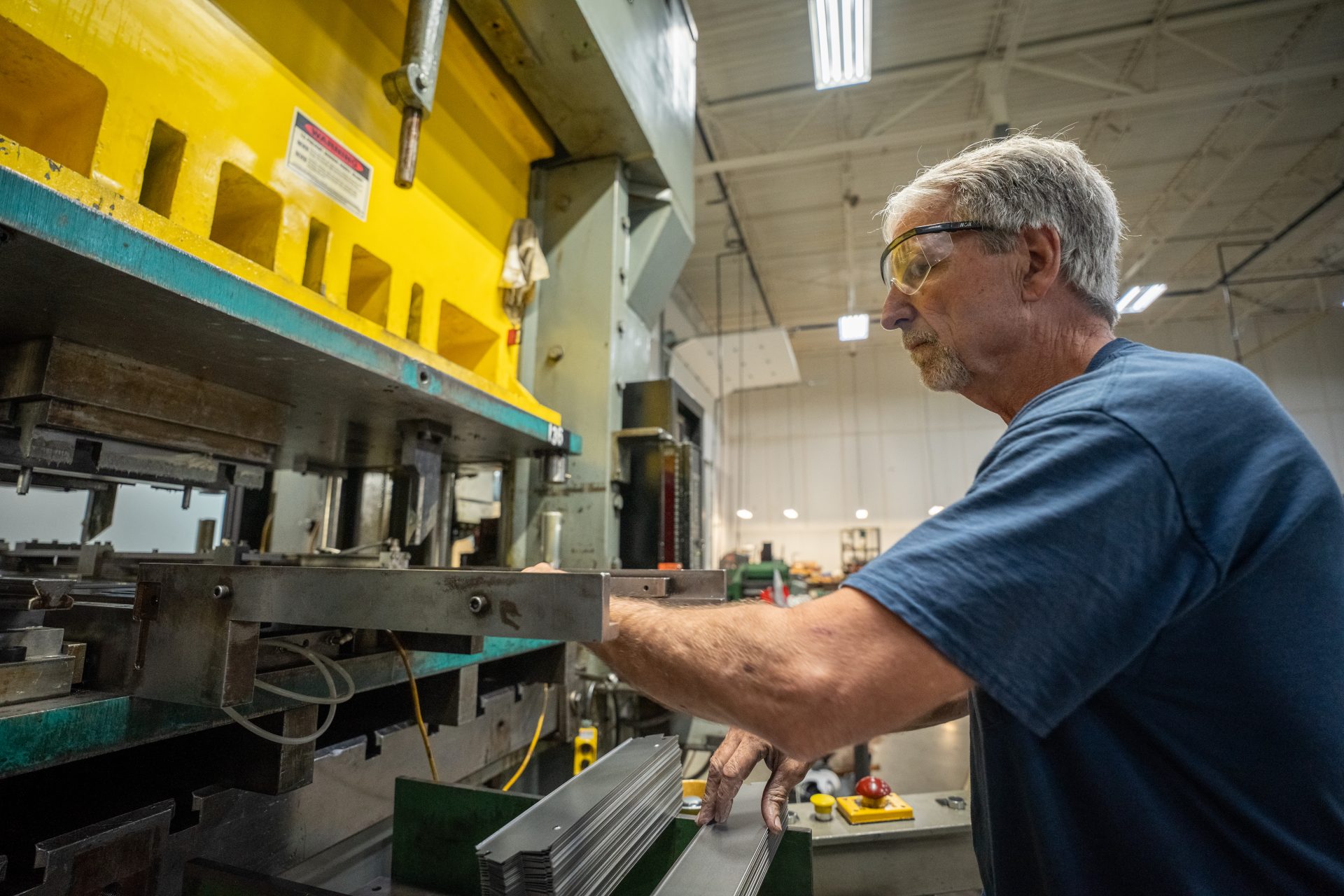
Real capacity depends on the people running the floor — toolmakers, press operators, welders, machinists who know the equipment, the materials, and the customers. Our team in Belleville and Hoffman includes six skilled toolmakers and operators who’ve been refining their craft for decades. That kind of bench strength isn’t built overnight, and it’s the difference between a shop that can scale and a shop that can’t.
Tooling Readiness
Tooling is where capacity quietly wins or loses. A die that’s worn, missing, or waiting on an outside vendor is a die that isn’t running parts.
Because we design, build, and maintain our tooling in-house, we control the timeline. When a tool needs adjustment, we walk it down the hall — not ship it across the country. That’s not a small detail. It’s the reason we can hit aggressive turnarounds without compromising quality.
Changeover Efficiency
Every minute spent changing over is a minute not spent producing. High-performing shops attack changeover the way racing teams attack pit stops — with process, repetition, and continuous improvement.
Smart die design helps. So does experienced labor. So does in-die innovation that eliminates secondary operations entirely. The shops that treat changeover as a discipline, not an afterthought, free up real capacity without adding a single piece of equipment.
Maintenance Strategy
Reactive maintenance kills capacity. Preventive maintenance protects it.
The presses, lasers, and CNC machines that drive our operation are on a planned maintenance schedule for a reason. Unplanned downtime doesn’t just cost the hours of the breakdown — it cascades through the schedule and disrupts every customer downstream. Maintenance isn’t an expense. It’s an investment in throughput.
Capacity Is a System, Not a Number
When customers ask about our capacity, we don’t just point to the floor plan. We point to the whole system — the scheduling, the people, the tooling, the discipline, the maintenance — that lets us deliver consistently, year after year.
If you’re looking for a stamping and fabrication partner who treats capacity as a commitment, not a marketing line, we’d like to talk.